For Parents
Play Isn't Just Fun. It's Brain Building — for Kids and Parents
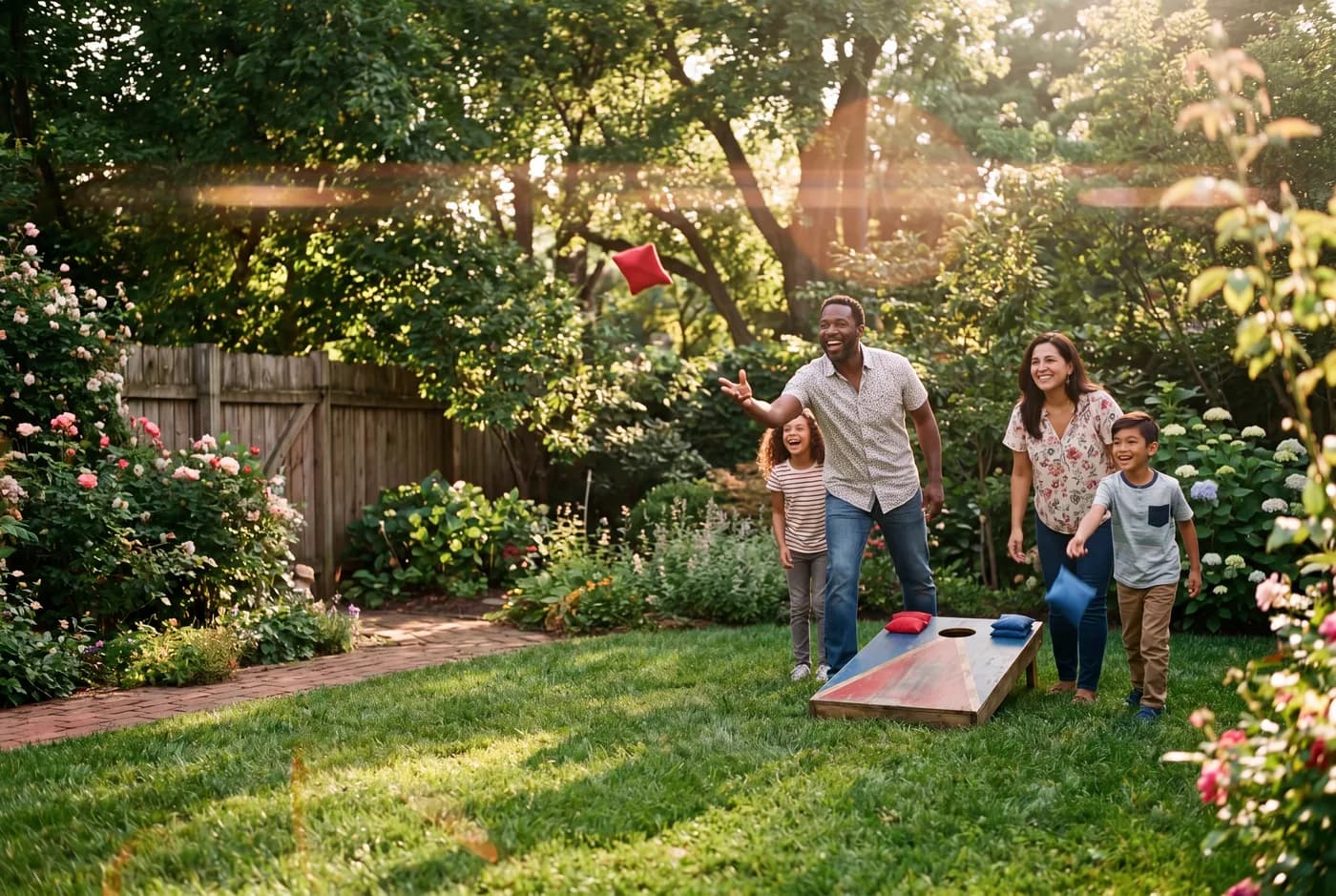
It can feel like play is the thing you squeeze in after the important stuff — homework, activities, errands. But according to the American Academy of Pediatrics (AAP), play is the important stuff.
In its clinical report The Power of Play (first published in 2018 and reaffirmed in January 2025), the AAP puts it plainly: "Play is not frivolous; it is brain building." The report is written for pediatricians and recommends they write a "prescription for play" at well-child visits in the first two years of life.
Here's what the research says play does for children's brains — and what it does for the grown-ups who join in.
What play does for a child's brain
It builds executive function
The AAP describes executive function as how we learn rather than what we learn. It has three parts: cognitive flexibility, inhibitory control, and working memory. Together, these skills help children pay attention, filter out distractions, control impulses, solve problems, and switch gears. The report identifies building executive function as a core benefit of play.
Some of the evidence the AAP cites:
- In randomized trials, physical play in 7- to 9-year-olds improved attention control, cognitive flexibility, and brain functioning linked to executive control.
- Familiar games like "Simon Says" and "Head, Shoulders, Knees, and Toes," which ask kids to control their own actions and impulses, have been shown to improve executive functioning skills.
- Children who were in active play for one hour a day were better able to think creatively and multitask.
It helps kids handle stress
The AAP reports that play is closely linked to the body's stress response. In one study it cites, 3- and 4-year-olds who were anxious about starting preschool were randomly assigned either to play for 15 minutes or to listen to a teacher read a story. The play group showed a twofold decrease in anxiety.
The report also notes that the shared joy and back-and-forth connection parents and children experience during play help regulate the body's stress response — and that play becomes even more important for children facing adversity.
It shapes how the brain develops
Much of the research on play and brain structure comes from animal studies, mostly in rats, and the AAP is careful to say those results can't be directly applied to humans. Still, the findings are striking: in rats, play refined the prefrontal cortex (the brain region behind planning and self-control) and stimulated production of BDNF, a protein that supports the growth of neurons and connections. Rats deprived of play when young were later worse at problem solving.
It grows language, social skills, and creativity
According to the AAP report:
- When preschoolers were given blocks to play with at home with minimal adult direction, they showed improvements in language six months later — particularly children from low-income families.
- Playing with peers requires negotiating rules and cooperating, and children use more sophisticated language when they play together.
- Play with traditional toys was linked to more and better language than play with electronic toys.
- Children who played with objects with minimal adult direction came up with about three times as many creative uses for an object as children who were given specific instructions.
Outdoor play adds even more
The AAP notes that outdoor play gives children opportunities to improve sensory integration skills and engages motor, cognitive, social, and language development all at once.
What play does for the adult brain
Play isn't only good for kids. The AAP report has a whole section on the benefits to adults of playing with children:
- It can lower parents' stress. The report cites research showing that positive parenting activities, like playing and shared reading, lead to decreases in parental stress and a stronger parent–child relationship. That matters more than ever — parental loneliness is its own public health issue, and play is one of the places connection happens.
- It helps you understand your child. Through play, parents learn to see the world from their child's perspective and are likely to communicate more effectively with them — even sharing their child's sense of humor.
- It brings back joy. The report describes play as a chance for adults to reexperience the joy of their own childhood and recharge.
And when play gets you moving, your brain benefits too. According to the CDC, a single session of moderate-to-vigorous physical activity reduces feelings of anxiety and improves sleep quality. Over the long term, regular physical activity reduces the risk of depression and of developing dementia, including Alzheimer's disease.
So why aren't kids playing more?
The AAP report points to real barriers: more academic pressure, more scheduled activities, more screen time, and fewer safe places to play. It cites earlier research finding that:
- Only 51% of preschool children went outside to walk or play once a day with a parent.
- 94% of parents expressed safety concerns about outdoor play.
- Only 20% of homes were within a half-mile of a park.
The report also notes that children in low-income urban neighborhoods may have less access to quality public spaces, and that parents who feel their neighborhood is unsafe may not let their kids play outdoors.
Make room for play
The good news from the AAP: kids don't need expensive toys to get these benefits. Blocks, balls, boxes, crayons, and simple household objects work — and what matters most is a parent's presence and attention. A few ideas drawn from the report:
- Let kids lead. Children discover more when adults facilitate play without directing it.
- Get moving together. Tag, hide-and-seek, hopping, swinging, and climbing build motor skills — and get your heart rate up too.
- Make time for friends. The AAP encourages scheduling time for children to play with peers to build social skills and friendships.
- Choose real toys over screens when you can. Traditional toys were linked to richer language than electronic ones.
A place to play in Las Vegas
Hopscotch was built for exactly this. We're a Las Vegas marketplace where families can book private backyards and activity spaces by the hour, hosted by local neighbors. Every Hopscotch host goes through identity and background verification before their space can go live — a review built directly into how listings get approved, not an optional step. Every visit is parent-supervised, so it's a natural invitation to play with your kids — and to invite another family along. We'll also be hosting community events to help parents meet other parents with kids in the same age range.
Hopscotch is live in Las Vegas. Browse spaces →
Not in Las Vegas? Request Hopscotch in your city and we'll let you know when we arrive.
Have a backyard or activity space your neighbors' kids would love? Become a Hopscotch host and earn money from space you're not using.
Sources
- Yogman M, Garner A, Hutchinson J, et al.; American Academy of Pediatrics, "The Power of Play: A Pediatric Role in Enhancing Development in Young Children", Pediatrics, 2018; reaffirmed January 2025
- Centers for Disease Control and Prevention, "Health Benefits of Physical Activity for Adults" (updated March 10, 2026)